
Pulaski County Court Records After Arrest
After a Pulaski County arrest, two record tracks can exist at the same time. The jail track begins with booking at New River Valley Regional Jail and shows limited custody information in the NRVRJ lookup. The court track begins when a criminal case opens in the appropriate Virginia court. General District Court often handles misdemeanors, traffic matters, preliminary felony hearings, bond hearings, and early appearances. Circuit Court handles felony cases after indictment or certification and other major criminal matters.
The Pulaski County courts are listed on the official county courts page at 45 Third Street N.W. in Pulaski. Circuit Court is Suite 101 and can be reached at 540-980-7825. General District Court is Suite 102, phone 540-980-7470, email pulaskigd@vacourts.gov. Juvenile and Domestic Relations Court is Suite 103, phone 540-980-3822. Spencer A. Rygas is listed as Circuit Court clerk and FOIA officer. The local court page is useful when an online portal does not answer a records question.
For custody and booking identifiers, use Pulaski County jail inmate records. For booking photos, use the Pulaski County jail mugshots record path. Court records after a jail arrest focus on filed charges, docket entries, hearing dates, bond orders, dispositions, and whether the case moved from one court to another.
Pulaski County Arrest to Court Record
The local pathway starts with arrest, warrant service, or capias execution. If the person is committed to jail, NRVRJ creates the custody record. A magistrate may conduct a bail hearing and choose personal recognizance, unsecured bond, secured bond, or ineligible for bail. Once the matter moves into the court system, the court file can show the formal charge, hearing date, case status, bond orders, and later outcomes such as dismissal, amendment, certification, indictment, plea, or trial result.
The Pulaski County Commonwealth's Attorney is Justin L. Griffith. The official Commonwealth's Attorney page says the office prosecutes all felonies and certain misdemeanors. The prosecutor's office is not the jail custody office and is not the clerk's office, but its role explains why a jail booking charge can differ from the court charge. Prosecutors may amend, reduce, dismiss, or pursue charges as the facts, law, and evidence develop.
The official Pulaski County courts page identifies the local court offices that handle court records after a jail arrest.
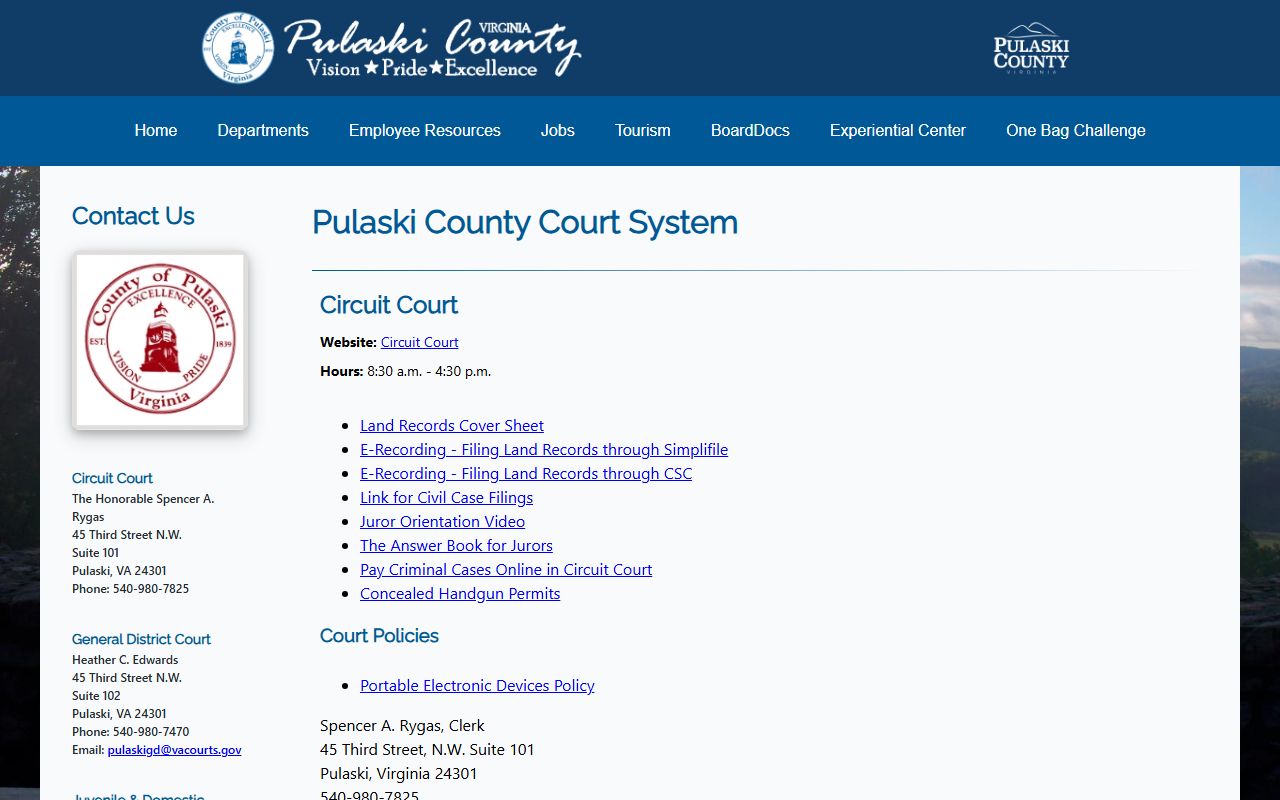
The court contact list matters because not every case type is available through a public online search.
Find Court Records After Arrest
The Virginia court system provides several search channels. Start with the statewide case information hub if the exact court is not known. Then use General District Court for many first appearances, misdemeanors, traffic cases, and preliminary felony proceedings. Use Circuit Court for felony matters after certification or indictment. Juvenile and Domestic Relations Court records are not available online through the same public case system because of confidentiality limits.
- Search the Virginia case information hub to choose the right court system.
- Use General District Court Case Information for early criminal, traffic, misdemeanor, and preliminary felony matters.
- Use the Circuit Court case information page or OCIS when a case is in circuit court or needs statewide criminal and traffic coverage.
- Search by defendant name, case number, or hearing date when the portal allows those fields.
- Call the correct Pulaski court clerk if no public online result appears or if the case may be juvenile, sealed, or too new.
The Virginia court case information hub is the statewide starting point for case lookup.
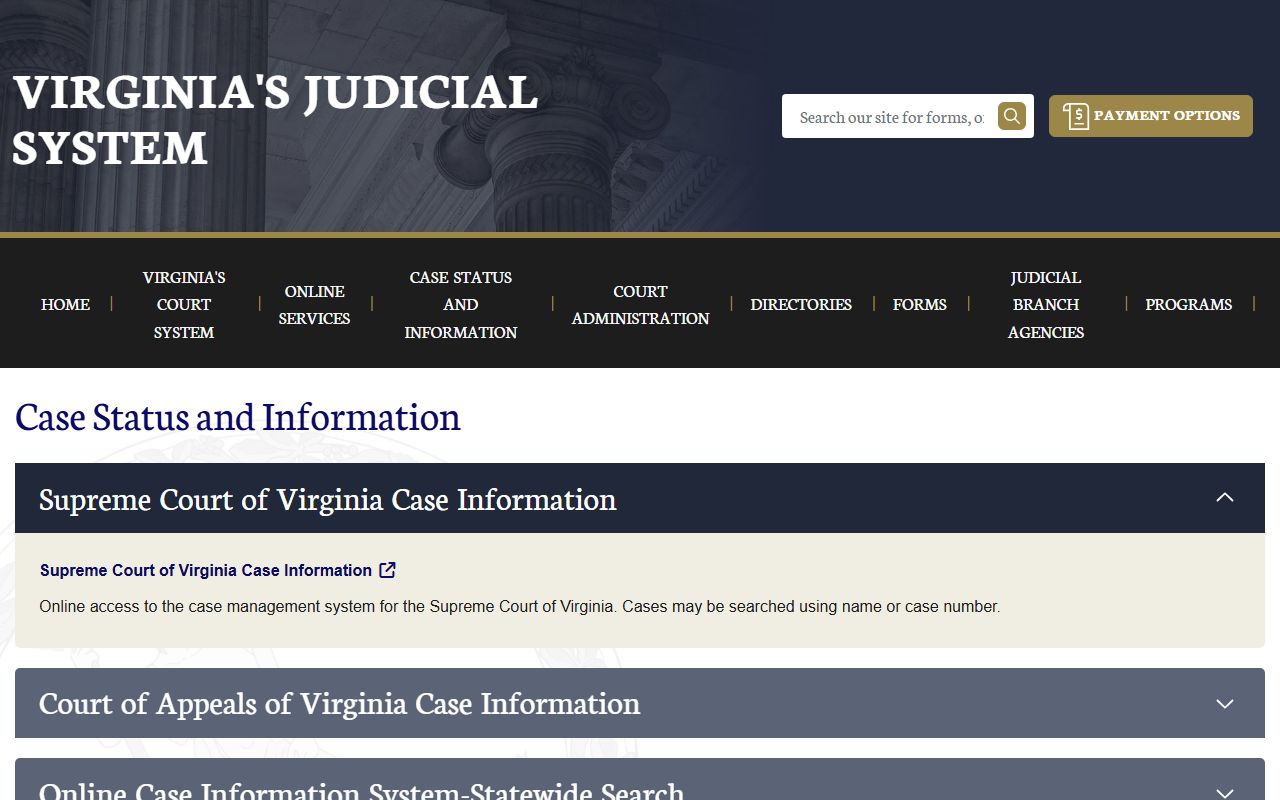
The hub separates circuit, general district, appellate, and statewide systems, which helps avoid searching the wrong index.
Pulaski County Court Search Fields
Court portals are not the same as the jail roster. A jail record may show a booking number and release date, while a court portal points to a case number, party name, hearing date, and charge status. The official court descriptions identify these public search paths.
| Portal | Search Fields or Controls |
|---|---|
| Case Status and Information hub | Select Circuit Court Case Information, General District Court Case Information, statewide OCIS, or appellate systems. |
| Circuit Court Case Information | Search by locality using name, case number, or hearing date. |
| General District Court Case Information | Select court or locality, then search by party name, case number, or hearing date. |
| OCIS statewide search | Search statewide criminal and traffic information in general district courts and select circuit courts. |
| Juvenile and Domestic Relations Court | No online case information through the same public system. |
Pulaski County Charging Documents
A court record after a jail arrest usually depends on a formal charging document. Virginia practice can involve different document names based on the stage and court. The research did not confirm a Pulaski-specific public sample form, so the safer approach is to identify the concept and then read the actual docket entry or clerk record for the case. The key point is simple: the jail booking fact is not the same thing as the charge that moves through court.
| Document | Typical Role | What to Check |
|---|---|---|
| Complaint or warrant | Starts many criminal cases after an alleged offense or arrest warrant. | Charge wording, date, court, defendant name, and first hearing. |
| Information | Prosecutor-filed charging document in cases where that process applies. | Whether the defendant waived indictment or the filing changed earlier charges. |
| Indictment | Grand jury charging document for felony prosecution in circuit court. | Offense count, statutory charge, arraignment or trial setting, and related lower-court case. |
Pulaski County Charge Status
Charge status is one of the main reasons to search court records after a jail arrest. A booking may begin with one suspected offense, but the court case can later show an amended charge, reduced charge, dismissal, nolle prosequi, certification to a grand jury, indictment, plea, or verdict. The court docket is the better source for the legal status of the charge. The jail roster is a custody tool.
| Status | What It Means |
|---|---|
| Pending | The case is open and no final disposition appears in the court record. |
| Amended or reduced | The formal charge changed from the earlier booking or case entry. |
| Dismissed | The court ended the charge without a conviction on that count. |
| Nolle prosequi | The prosecutor chose not to proceed at that time, subject to Virginia law and court handling. |
| Certified or indicted | A felony matter moved from the lower-court stage toward Circuit Court prosecution. |
| Convicted | The case ended with a guilty plea, finding, or verdict on that charge. |
Pulaski County Bond Records
Bond is part custody record and part court record. NRVRJ's bond page explains that a magistrate can set personal recognizance, unsecured bond, secured bond, or ineligible for bail after an arrest warrant. Once the person is committed to jail, a judge is the official who can lower the bond or arrange recognizance release. A court portal or clerk can help confirm hearing dates and court orders, while NRVRJ can confirm custody status.
| Bond Type | How It Works |
|---|---|
| Personal recognizance | Written promise to appear and follow terms without money or property security. |
| Unsecured bond | Release based on a promise to appear, backed by possible forfeiture if the person fails to appear. |
| Secured bond | Backed by cash, property, or a compensated or non-compensated surety. |
| Ineligible for bail | No release pending the next court appearance or court order. |
If another agency has a hold, detainer, probation violation, parole matter, ICE matter, or federal process, posting local bond may not cause release. Call NRVRJ for current custody and the clerk for case orders.
Pulaski County Arrest Warrants
No official Pulaski County Sheriff's Office active warrant list and no official NRVRJ warrant app were confirmed in the research. Sheriff Michael W. Worrell's office may hold or serve sheriff-side process, but warrant lookup should be treated as a multi-channel process. Search the Virginia court portals for pending cases, failure-to-appear entries, capias-related events, or hearing status. Contact the relevant court clerk for court process. Contact the sheriff's office at 540-980-7800 for sheriff-held warrant information, and contact NRVRJ only for custody status.
Important: A person who may have an active warrant should consult an attorney or call the court before appearing in person.
Pulaski County Charges vs Convictions
A charge is an accusation. A conviction is a final result after a guilty plea, finding, or verdict. Court records after a jail arrest may show both, but they should not be read as the same thing. A dismissed charge, reduced charge, or nolle prosequi entry can change the legal meaning of the case even when the old jail booking still exists as a historical custody record.
| Point | Charge | Conviction |
|---|---|---|
| Stage | Filed accusation in the court case. | Final finding, plea, or verdict. |
| Proof | Based on probable cause or formal prosecution process. | Requires legal resolution in court. |
| Record use | Shows what was alleged and tracked. | Shows the outcome that may affect sentence or later records. |
Pulaski County Sealed Records
Virginia FOIA gives a public-records route for many existing records, but public access is not unlimited. Juvenile records, criminal investigative files, sealed matters, expunged records, and some sensitive information may be withheld or redacted. Expungement and sealing are legal processes, not a request to a commercial site. A dismissed or otherwise eligible case should be reviewed through Virginia expungement law and the court that controls the record.
| Point | Sealed | Expunged |
|---|---|---|
| Public view | Hidden or limited by court order or confidentiality rule. | Treated through the legal expungement process when eligible. |
| Agency access | May remain available to certain officials under law. | Depends on the Virginia order and record holder. |
| Next step | Ask the clerk about the case's access status. | Consult counsel or the court process for eligibility and orders. |
Pulaski County Records Access
Virginia FOIA, including Va. Code § 2.2-3704 and Va. Code § 2.2-3706, supports public access to many records held by public bodies while preserving exemptions and limits. For jail booking records, start with NRVRJ. For sheriff-held law-enforcement records, start with the sheriff. For case records, start with the court portal or clerk. Requests should identify the existing record with reasonable specificity.
The Pulaski County Commonwealth's Attorney page explains the prosecutor's office role in felony and certain misdemeanor cases.
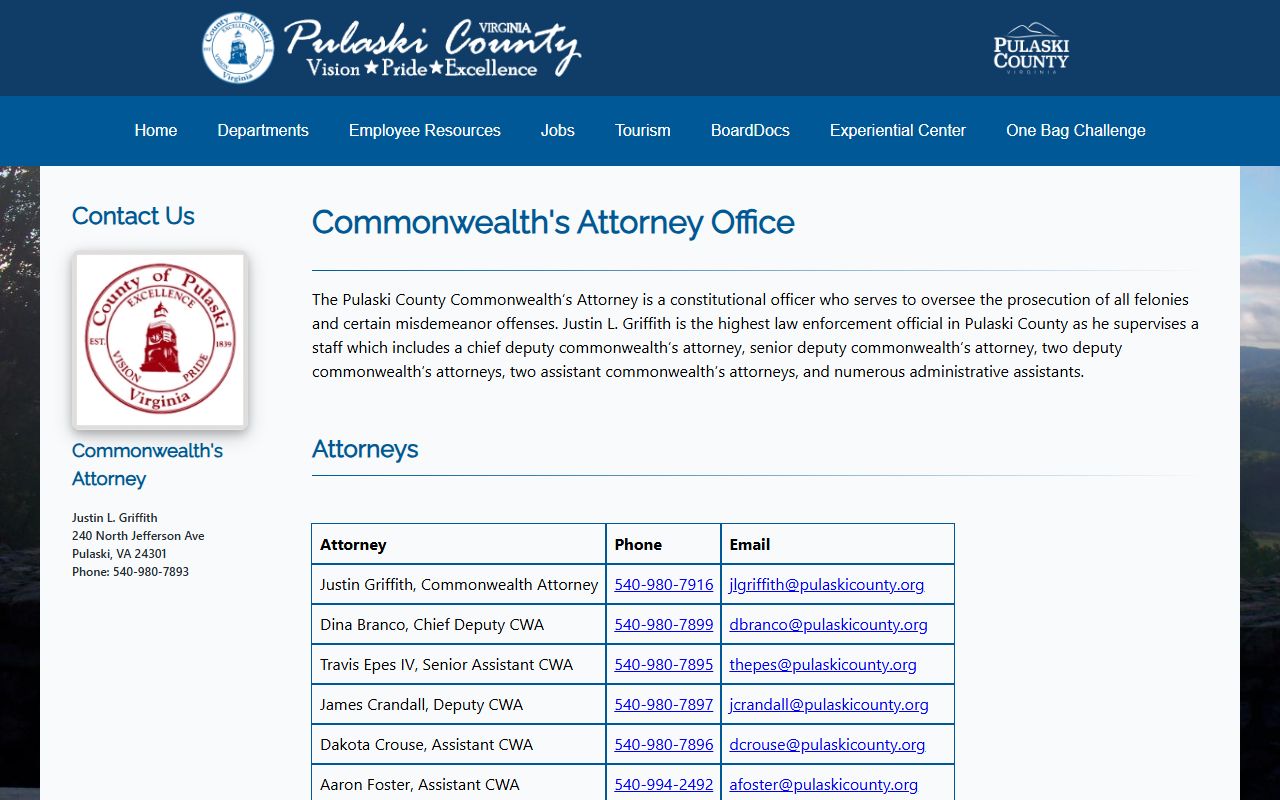
The prosecutor role helps explain charge decisions, but clerks remain the proper route for court record copies and docket questions.